X Plane 11 Crj 200 Free Download
10 things we know nigh the secret Ten-37B space airplane
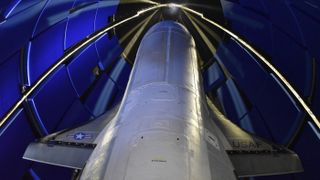
The U.South. Department of Defense force'southward uncrewed X-37B spy plane is one of the most intriguing spaceships in the world, flying regular covert missions whose purposes aren't fully known. Simply over the years, information about the craft, which is too known every bit the Orbital Test Vehicle (OTV), has come to light in dribs and drabs. Here, nosotros take a look at 10 things that can be definitively said about the secretive infinite plane.
Bones facts are bachelor
The reusable X-37B, which resembles a smaller version of one of NASA's at present-retired space shuttles, was originally built by NASA in 1999, equally previously reported by Live Science's sis site Space.com. Information technology is around 29 anxiety (viii.viii meters) long and nine.v feet (2.ix m) tall, with a wingspan of slightly less than fifteen feet (4.vi one thousand). Information technology weighs eleven,000 pounds (4,990 kilograms) when on the launchpad.
Like the space shuttle, the Ten-37B takes off vertically and is propelled by a rocket. In one case in orbit, it can maneuver on its own, and information technology eventually lands on a rails back on Earth, much similar a conventional airplane. The vehicle has a pocket-sized payload surface area, roughly the size of a pickup truck bed, enabling it to carry gear and satellites. Information technology operates at an altitude of betwixt 150 and 500 miles (240 to 805 kilometers) higher up Earth, according to its manufacturer, Boeing.
Different military machine branches take had it over the years
NASA transferred 2 X-37B vehicles to the Pentagon's Defence force Advanced Research Projects Agency (DARPA) in 2004, according to Space.com. After being operated past the U.S. Air Forcefulness for many years, the robotic spy planes came under the purview of the newly established Space Strength in 2020, according to Military.com, a news and resource website for armed forces members.
Nobody knows quite what it's upwardly to
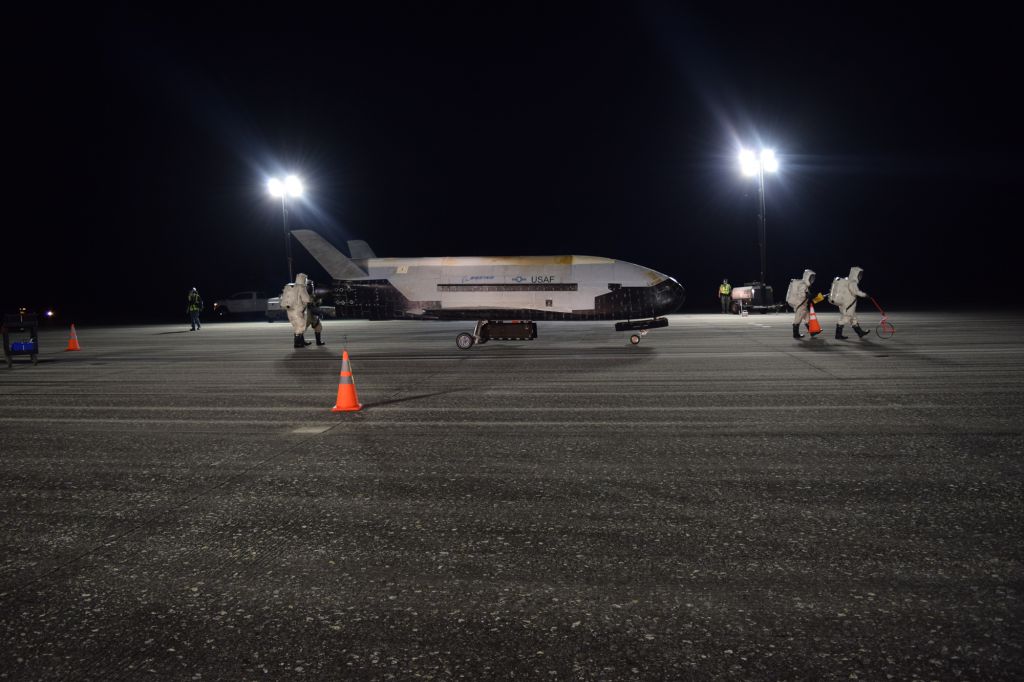
Despite flight six missions to date, the X-37B'southward true purpose remains a mystery. Some possibilities include surveillance of the Earth's surface from on high and deploying spy satellites, though nothing has ever been confirmed.
More out-there theories have been proposed, such every bit the notion that the X-37B could be a space-based bomber, a vehicle for spying on the Chinese infinite station, or a means for the U.S. war machine to interfere with other countries' satellites. Experts have splashed cold water on all these ideas, saying they would require large amounts of fuel or would be too easy to trace back to the American war machine, equally previously reported by Live Scientific discipline.
It tin can remain in space for years
One of the two X-37Bs accomplished its beginning launch in 2010 and spent 224 days in space. Its partner vehicle outset flew a year afterward and remained in orbit for more than double that corporeality of time.
The current record for the spacecraft is 780 days — more than two full years — in orbit, which occurred during the fifth flight of the X-37B, Live Science previously reported. What information technology was doing upwardly in that location for all that time remains a mystery.
It can launch on a SpaceX rocket
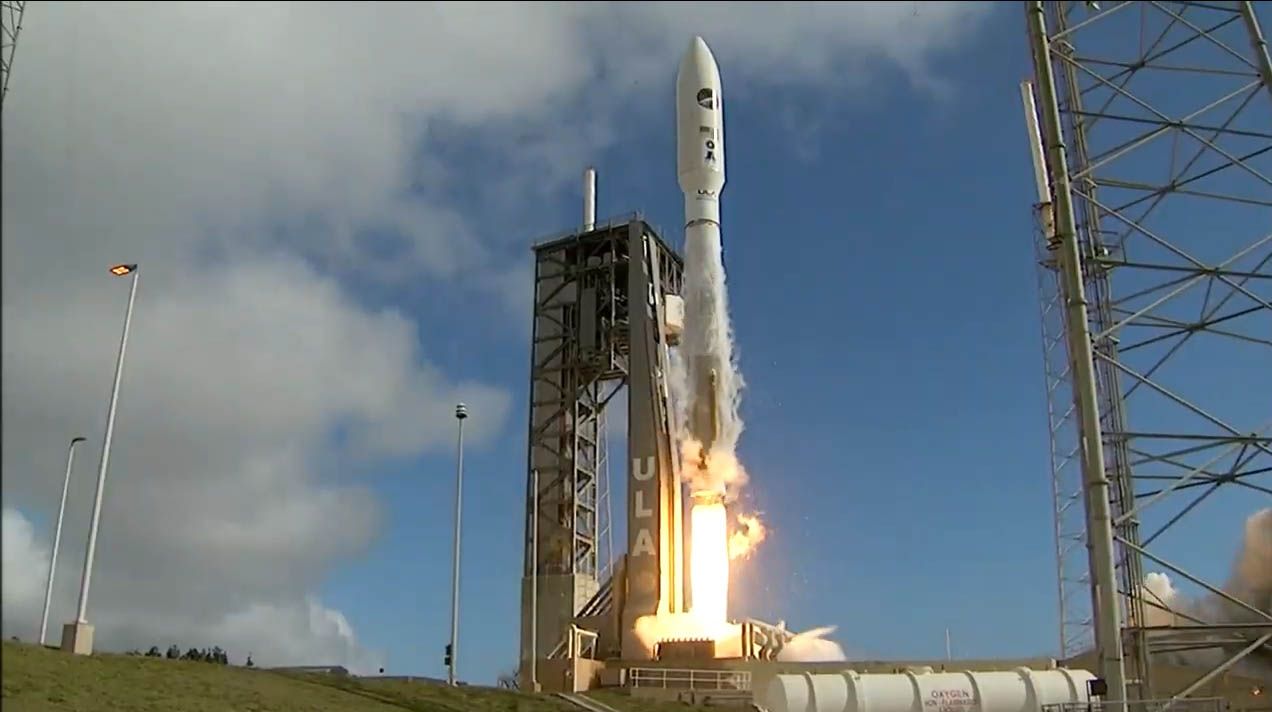
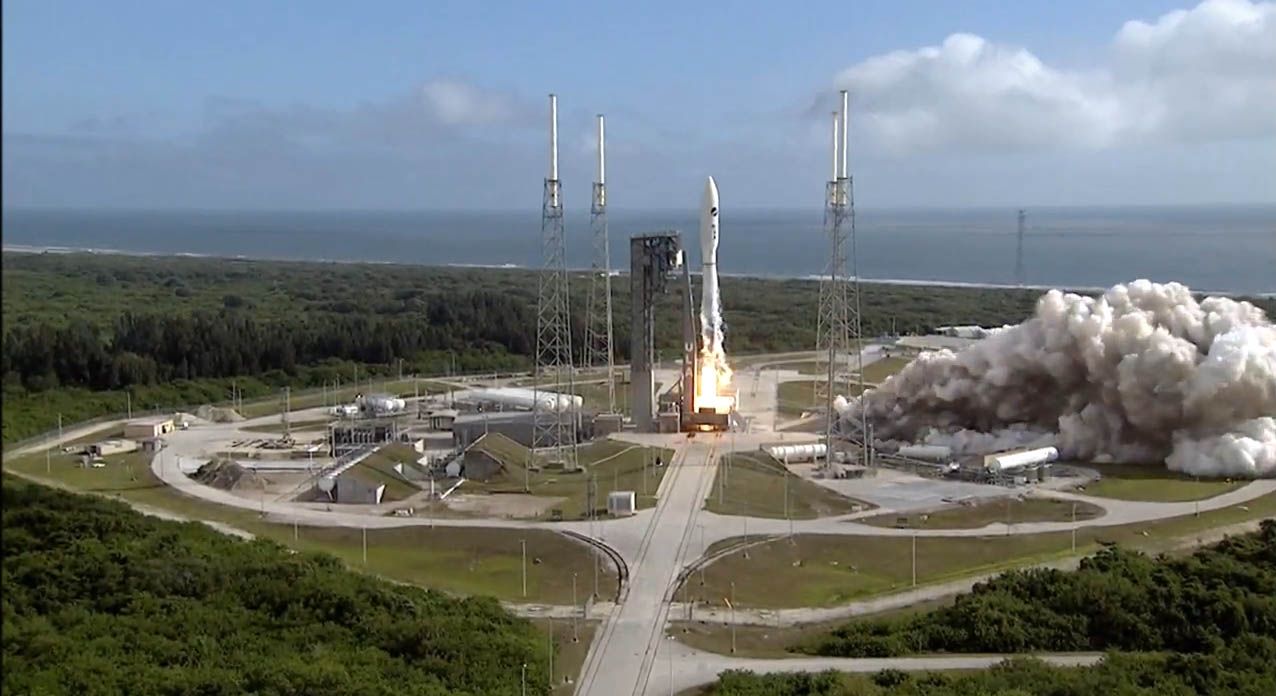
While the Ten-37B has typically ridden United Launch Alliance's Atlas 5 booster into space, the vehicle is capable of being launched by different rockets. During its fifth mission in 2017, the military inverse things upward a chip and used a SpaceX Falcon 9 rocket to take information technology to orbit, co-ordinate to Infinite.com.
Civilians have photographed an X-37B
Though it is a clandestine piece of war machine hardware, the Ten-37B is not immune to being spotted by civilian skywatchers. The vehicle's launch times are publicly appear, which enabled satellite tracker Russell Eberst of Edinburgh, Scotland, to determine where information technology would be in the sky and come across it through a telescope in October 2017. Netherlands-based sky sleuth Cees Bassa did the same that twelvemonth, Alive Science previously reported.
And a Dutch skywatcher and satellite tracker named Ralf Vandebergh was able to photograph the robotic vehicle as it orbited overhead in 2019. "Nosotros tin can recognize a fleck of the nose, payload bay and tail of this mini-shuttle, with even a sign of some smaller item," he told Live Scientific discipline at the time.
It tin can conduct experiments
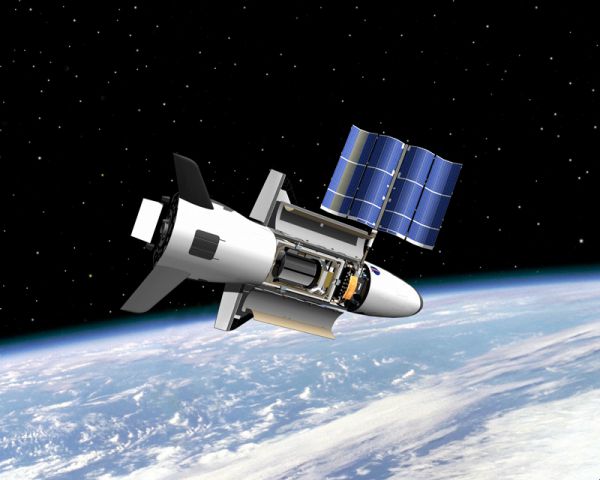
Soon before the most contempo X-37B launch in 2020, the U.S. military revealed that the spy plane had a new service module attached to its rear that immune for large numbers of experiments to exist carried to orbit. "The incorporation of a service module on this mission enables usa to go on to expand the capabilities of the spacecraft and host more experiments than whatsoever of the previous missions," Randy Walden, director and program executive officer for the Department of the Air Strength Rapid Capabilities Office, said in a statement.
The mission deployed a minor satellite known as FalconSat-viii, which contained five experimental payloads, some adult by the U.S. Air Force and some developed past NASA. While NASA has stated that it was flight an experiment on a previous X-37B flight, this was the first time the armed forces had disclosed any specifics about such cargo.
It has won awards
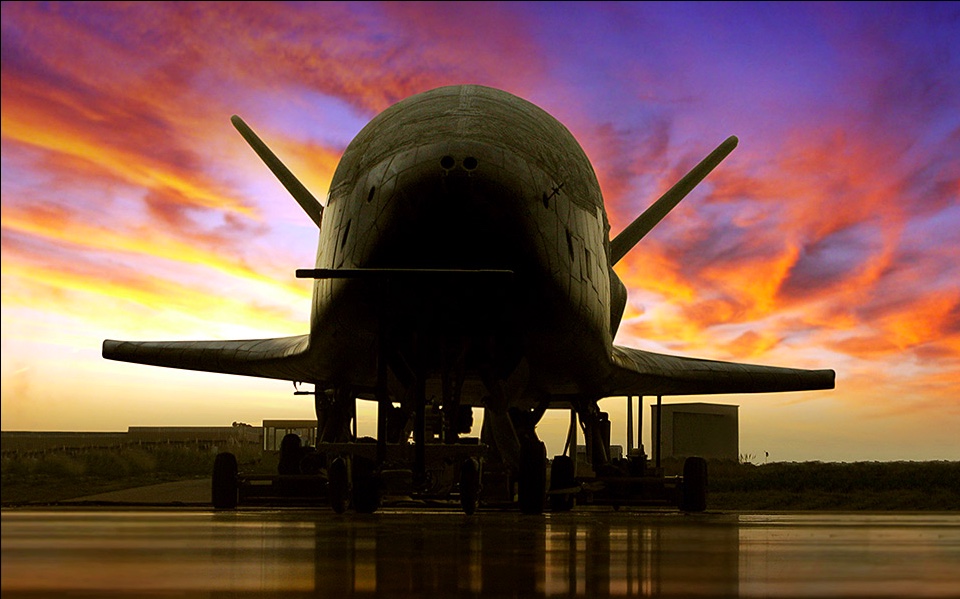
In 2020, the X-37B was given the Collier Trophy, 1 of the almost prominent awards in aviation, for pushing "the boundaries of flight and space exploration," co-ordinate to the U.S. Air Strength. "Sophisticated and uncrewed, the Ten-37B advances reusable spaceplane technologies and operates experiments in space that are returned for further examination on earth," Secretary of the Air Force Barbara Barrett said in a argument.
Previous Collier Trophy winners include Orville Wright, Howard Hughes, the Apollo xi lunar landing team, the International Space Station, and the B-52.
It is designed to frustrate enemies
During a panel at the Aspen Security Forum in 2019, former Air Force Secretarial assistant Heather Wilson revealed that the X-37B may be able to wing low enough to use Earth's atmosphere to change its orbit, according to Military.com. Wilson said that the vehicle's maneuvers are specifically designed to drive adversaries such as Russia and Prc "nuts" because they are unable to predict exactly how it will behave.
A crewed version was one time in the works
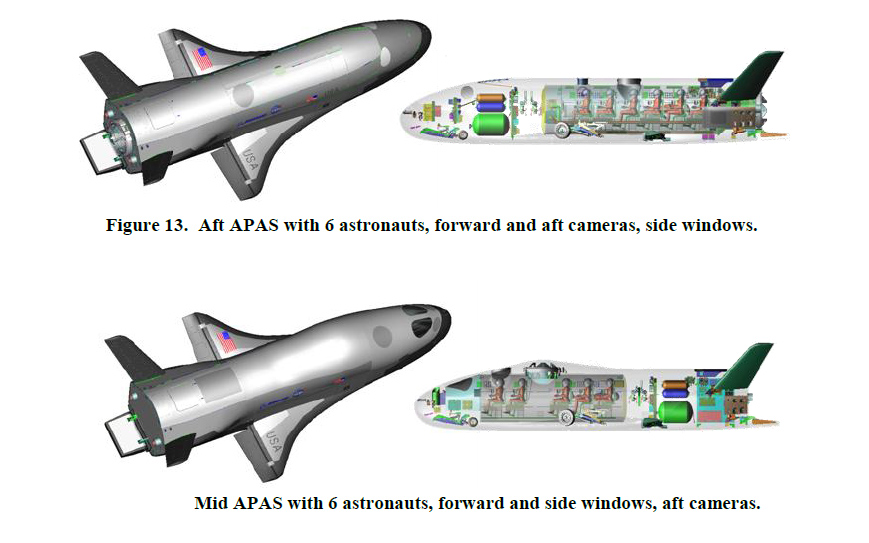
Back in 2011, Boeing studied different vehicle designs that the 10-37B could somewhen evolve into. A paper past visitor engineer Arthur Granz titled "X-37B Orbital Test Vehicle and Derivatives" mentioned a version called the 10-37C that would exist larger and able to carry astronauts, according to Space.com. But since and so, little information about the X-37C has appeared.
Originally published on Live Science.
DOWNLOAD HERE
Posted by: lawsonsampontang.blogspot.com


0 Komentar
Post a Comment